
Hinduism in Singapore: A Rich Heritage of Faith, Culture, and Unity
Hinduism is one of Singapore’s major religions and has played an important role in shaping the nation’s multicultural identity. Although Hindus form a minority of the population, the religion has flourished for nearly two centuries, contributing significantly to Singapore’s cultural, social, and economic development. With its vibrant temples, colorful festivals, and strong community organizations, Hinduism continues to thrive in the city-state while coexisting harmoniously with other faiths.
The history of Hinduism in Singapore dates back to the early 19th century when Sir Stamford Raffles established modern Singapore as a British trading port in 1819. As trade expanded, thousands of Indian laborers, merchants, soldiers, and administrators arrived from different parts of India, particularly Tamil Nadu, Kerala, Andhra Pradesh, and North India. Along with their skills and traditions, they brought their religious beliefs, customs, and cultural practices. Over time, Hindu communities established places of worship, schools, and charitable organizations that became integral to Singapore’s growing society.
Today, Hindus make up approximately 5% of Singapore’s population. The majority are of Indian origin, though the community also includes Singaporeans of Sri Lankan, Nepali, Balinese, and other South Asian backgrounds. Hinduism in Singapore reflects remarkable diversity, with devotees worshipping a wide range of deities including Lord Shiva, Lord Vishnu, Goddess Durga, Lord Murugan, Lord Ganesha, Goddess Lakshmi, Lord Krishna, and Hanuman. This diversity is reflected in the many temples and festivals celebrated throughout the country.
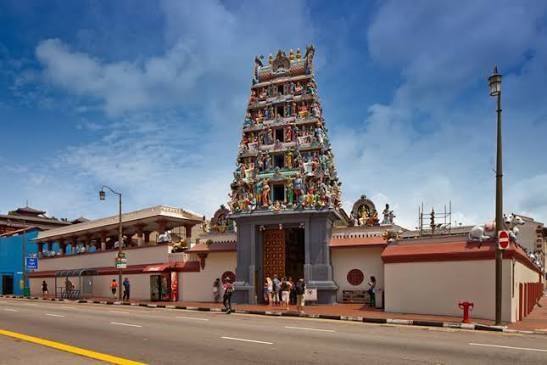
Singapore is home to more than 30 Hindu temples, many of which are architectural masterpieces. Among the most iconic is Sri Mariamman Temple, established in 1827 in Chinatown. It is Singapore’s oldest Hindu temple and is dedicated to Goddess Mariamman, who is revered as the protector against diseases and misfortunes. The temple’s towering gopuram (entrance tower), adorned with colorful sculptures of Hindu deities, attracts thousands of devotees and tourists each year. It has been designated a National Monument, recognizing its historical and cultural significance.
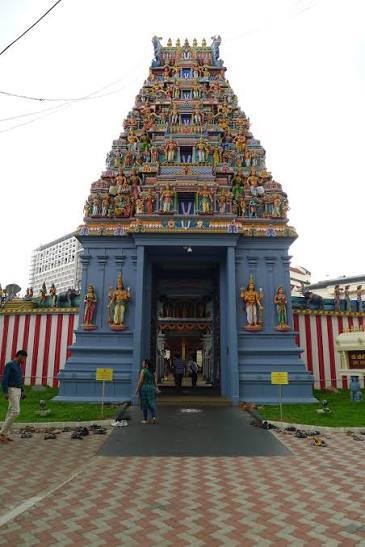
Another prominent place of worship is Sri Srinivasa Perumal Temple, dedicated to Lord Vishnu. Located along Serangoon Road in Little India, the temple serves as the starting point for the annual Thaipusam procession. The temple is known for its beautiful Dravidian architecture and remains a focal point for religious and community activities.
One of the most unique temples in Singapore is the Sri Veeramakaliamman Temple, dedicated to Goddess Kali. Built by early Indian settlers, it symbolizes strength, courage, and protection. The temple stands as one of Little India’s most recognizable landmarks and continues to serve thousands of worshippers throughout the year.
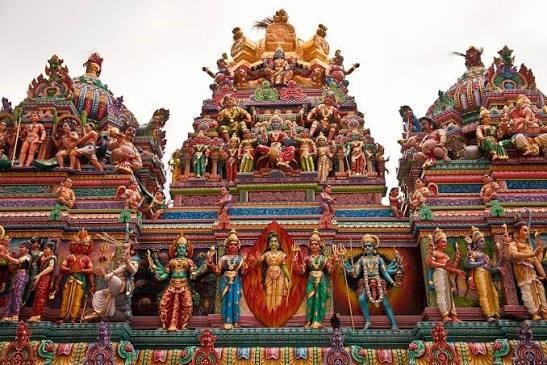
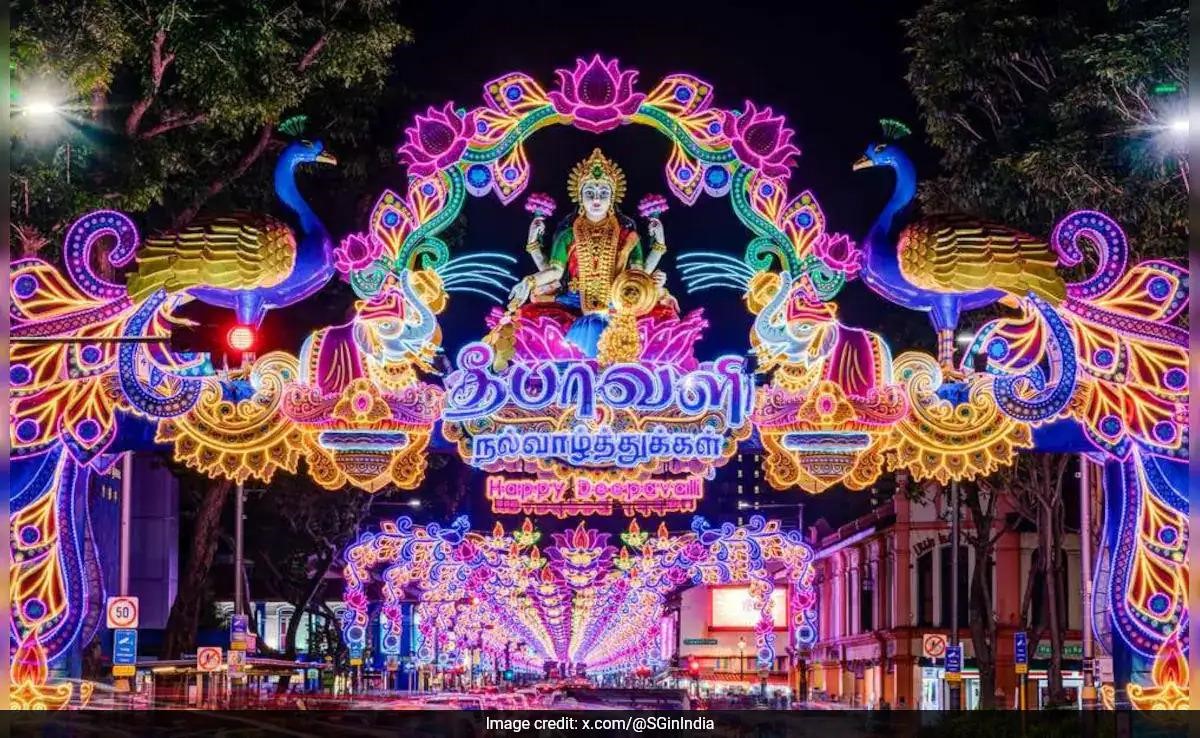
Festivals are among the most vibrant expressions of Hinduism in Singapore. Deepavali, also known as the Festival of Lights, is celebrated nationwide with dazzling decorations, cultural performances, and religious ceremonies. Little India transforms into a spectacular display of lights and festive markets, attracting visitors from across Singapore and around the world. Devotees decorate their homes with oil lamps, create colorful rangoli designs, offer prayers to Goddess Lakshmi, and exchange sweets and gifts with family and friends. Deepavali is recognized as a public holiday in Singapore, highlighting the country’s respect for religious diversity.
Another significant festival is Thaipusam, dedicated to Lord Murugan. During this sacred event, thousands of devotees undertake acts of devotion by carrying milk pots and elaborately decorated kavadis while walking in a grand procession through Singapore. The festival reflects themes of faith, sacrifice, gratitude, and spiritual discipline. Volunteers, community organizations, and religious groups work together to support participants, making Thaipusam one of the country’s most remarkable religious events.
Other festivals such as Pongal, Navaratri, Vinayagar Chaturthi, Krishna Janmashtami, Maha Shivaratri, and Tamil New Year are also celebrated with great enthusiasm. Temples organize special prayers, cultural performances, devotional music, and community feasts that strengthen social bonds and preserve traditional customs for future generations.
The administration of Hindu religious affairs in Singapore is overseen by the Hindu Endowments Board (HEB), a statutory board under the Ministry of Culture, Community and Youth. The Board manages several major temples and organizes large-scale religious events, including Thaipusam. It also supports educational, cultural, and charitable initiatives that benefit the Hindu community while preserving religious heritage.
Another key institution is the Hindu Advisory Board, which advises the Singapore Government on matters relating to Hindu customs, religious practices, and community affairs. Together, these organizations ensure that Hindu traditions continue to flourish while adapting to the needs of a modern, multicultural society.
Education and cultural preservation remain central to the Hindu community. Many temples conduct classes on Hindu scriptures, Sanskrit and Tamil languages, devotional music, Bharatanatyam dance, yoga, and moral education for children and young adults. Religious organizations also organize seminars, youth camps, and cultural festivals to promote awareness of Hindu philosophy and values.
Charitable service, known as seva, is another cornerstone of Hinduism in Singapore. Numerous temples and Hindu organizations provide food distribution programs, scholarships, educational assistance, disaster relief, blood donation drives, healthcare initiatives, and financial support for underprivileged families regardless of religion or ethnicity. These humanitarian efforts embody the Hindu ideals of compassion, selfless service, and respect for all living beings.
Hindu architecture and art also contribute significantly to Singapore’s cultural landscape. The intricate carvings, colorful sculptures, and elaborate temple designs reflect centuries-old South Indian craftsmanship. These temples are not only places of worship but also important cultural landmarks visited by tourists, historians, and architecture enthusiasts from around the world.
Singapore’s commitment to religious harmony has enabled Hinduism to prosper alongside Buddhism, Islam, Christianity, Taoism, and other faiths. The government actively promotes interfaith dialogue through various initiatives, encouraging mutual respect and understanding among diverse communities. Hindu organizations regularly participate in interfaith events, demonstrating the religion’s emphasis on tolerance and peaceful coexistence.
Despite being a minority religion, Hinduism continues to make a profound contribution to Singapore’s national identity. Its festivals enrich the country’s cultural calendar, its temples preserve centuries of artistic and spiritual heritage, and its community organizations contribute to education, charity, and social welfare. The values of compassion, righteousness, family, and service remain deeply rooted in the lives of Singapore’s Hindu population.
As Singapore continues to grow as a global city, Hinduism remains an enduring symbol of cultural diversity and spiritual resilience. Through its vibrant traditions, sacred temples, community service, and commitment to harmony, the religion continues to inspire generations while strengthening the multicultural fabric that defines modern Singapore.